
Skip to content
  • Clear communication
  • Free inspections
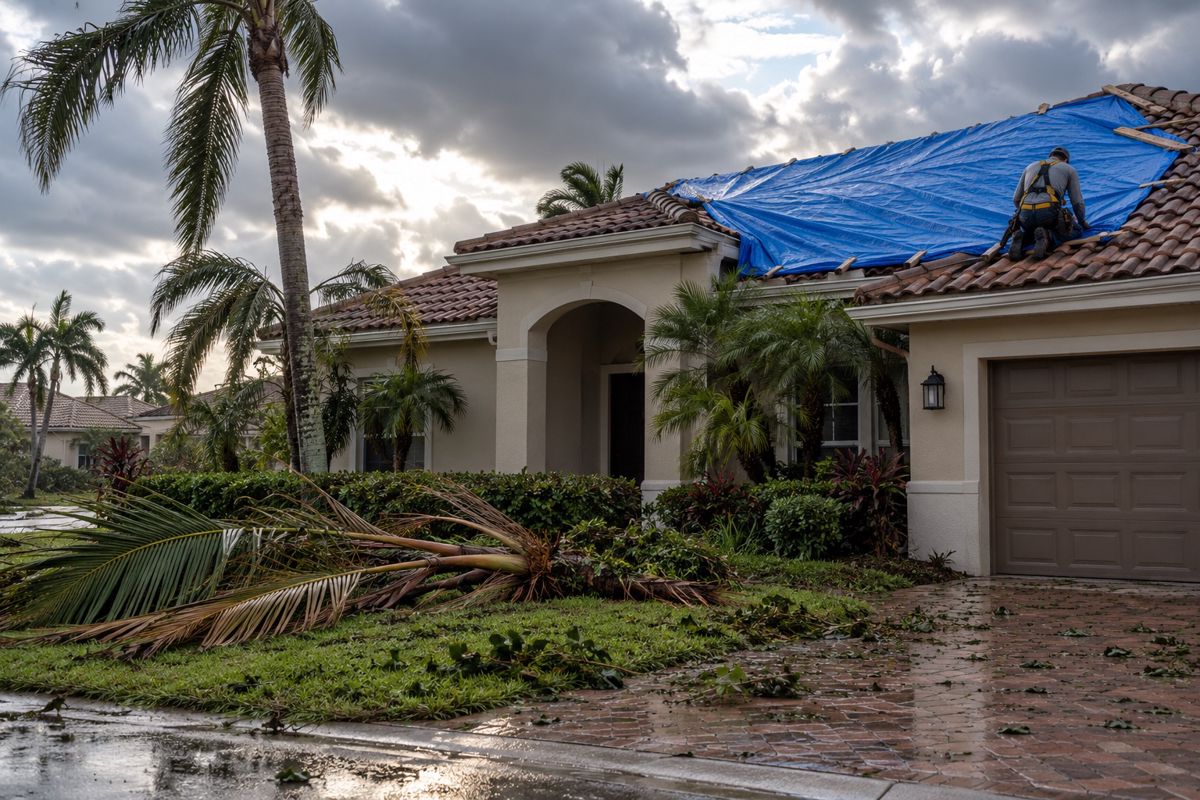
Blue tarp over a storm-damaged tile roof on a Florida house

Storm response in Coral Springs

Storm damage roof repair in Coral Springs after wind and rain

We cover the damage first, then explain repair options and what to document for your insurer.

  • Temporary tarping to stop more water
  • Photos and notes for your claim
  • Permanent repair to Broward code

What storm damage hits roofs in Coral Springs?

South Florida's roofs face wind more than anything else. Hurricanes and tropical storms bring sustained wind, and ordinary summer thunderstorms can produce strong gusts, heavy rain and the occasional tornado warning. Hail is uncommon here, though it does happen, so most damage we see comes from wind and flying debris.

Typical damage includes lifted or missing shingles, slipped or broken tiles, torn flashing, bent vent caps, and torn flat roof membranes. Fallen palm fronds and tree limbs can crack tiles and puncture shingles. Wind-driven rain can enter through damage that seems minor from the ground.

Hurricane season runs from June 1 to November 30, and the storms of late summer and early autumn cause most of the claims.

What should you do right after a storm hits your roof?

Stay safe first. Do not climb onto a wet roof, and stay away from downed power lines and anything hanging from the eaves. Then follow these steps.

  1. Check inside for dripping water, stains or sagging ceilings, and move belongings out of the way.
  2. Take clear photos and short videos of the damage from the ground and from inside.
  3. Call your insurance company to report the claim and ask what they need.
  4. Call a roofer to stop further water from entering. A temporary tarp or patch is normal.
  5. Keep receipts for any emergency work, since many policies reimburse reasonable protective costs.

Do not sign anything with a door-to-door contractor who knocks after a storm. Take your time and compare.

How do repairs work with an insurance claim?

Your insurer decides what is covered under your policy. A roofer can document the damage, take photos, and write an estimate for the repair, but cannot act as your adjuster or negotiate the claim for you. Florida law also does not allow a contractor to waive or rebate your deductible, so be careful with anyone who offers to.

Many policies cover sudden storm damage and not age or wear. If the roof was already near the end of its life, the insurer may pay for only part of the work. Read your policy and ask your agent about the deductible for wind and hurricane damage, which can be a percentage of the home's value.

Our roof repair team can explain a repair estimate line by line, and a roof inspection report can provide useful documentation.

The price depends on what the storm did and what lies beneath the visible damage. These are the main factors:

  • How much of the roof is affected, from a few tiles to a whole slope.
  • The roof material and whether replacement pieces are available.
  • Water damage to the underlayment, plywood and the ceiling below.
  • Whether the damage is bad enough that the building department requires more work.
  • The cost of temporary protection, such as tarping, before the permanent fix.

When damage is severe, repair may not be practical and a full roof replacement becomes the better option. We give you a written estimate for either path and explain the difference.

How long does it take and when should you call?

A temporary tarp or patch can often go on within the same day or the next, depending on conditions and how many people called before you. After a large storm, every roofer in the county is busy, so call early and be patient. We tell you honestly how soon a crew can come out.

Permanent repairs follow once the roof is dry and the insurer has seen the damage, if it wants to. Small repairs take a day. Larger ones with deck work take several days, and permits add scheduling time.

Call the same day you notice damage, even if you are not sure it is serious. Water that sits under tile or shingle spreads, and the longer it stays, the more it costs to dry out and fix.

Request storm and hail damage

Tell us what you need and we call you back.

No obligation.

Step 1 of 3

What do you need?

Questions about roofing in Coral Springs

Is hail damage common on roofs in Coral Springs?

No. Hail does happen in South Florida from time to time, but wind, wind-driven rain and flying debris cause far more roof damage here. If you believe hail hit your roof, we can look for bruising on shingles and cracked tiles and photograph what we find, so you have clear records for your insurer.

Can you put a tarp on my roof right away?

We try to get tarps on as quickly as safety and the schedule allow. After a major storm there is a long line of calls, so we tell you honestly when a crew can reach you. Call early and say where the water is coming in. A proper tarp is fastened to the deck, not just weighted down.

Will my homeowners insurance cover storm damage to my roof?

Most policies cover sudden damage from wind and storms, less your deductible, but not wear and tear or neglect. Your policy may have a separate hurricane deductible. Report the damage promptly, keep your photos and receipts, and ask your agent what the insurer needs before repairs go forward.

Can a roofer deal with the insurance company for me?

A roofer can inspect, document, and provide a written estimate, but cannot act as your public adjuster or negotiate the claim. Florida law also restricts contractors from waiving your deductible. If you want help with the claim itself, ask about a licensed public adjuster. Always read what you sign.

How do I spot a storm-chaser contractor?

Be careful with contractors who knock on your door after a storm, ask for a large payment before any work, pressure you to sign immediately, or cannot show a state license and insurance. Take time to verify the license online, check local references, and get a written quote before agreeing to anything.

Do storm repairs need a permit?

Emergency tarping usually does not, but permanent repairs often do, depending on the extent of the damage and the rules in force. We confirm before the work begins and apply for the permit when it is needed. Skipping a required permit can cause trouble with your insurer and when you sell.

  • Clear communication
  • Free inspections
  • Written estimates
  • Local crew

Ready when you are

Call now or request a quote online.

(954) 555-0128

How it works

1

Call or request a quote

Tell us what is happening with the roof.

2

Free inspection

A roofer checks the roof and gives a written price.

3

Work done right

Clean crew, nail sweep, warranty in writing.

Get my free quote