Skip to content
  • Clear communication
  • Free inspections
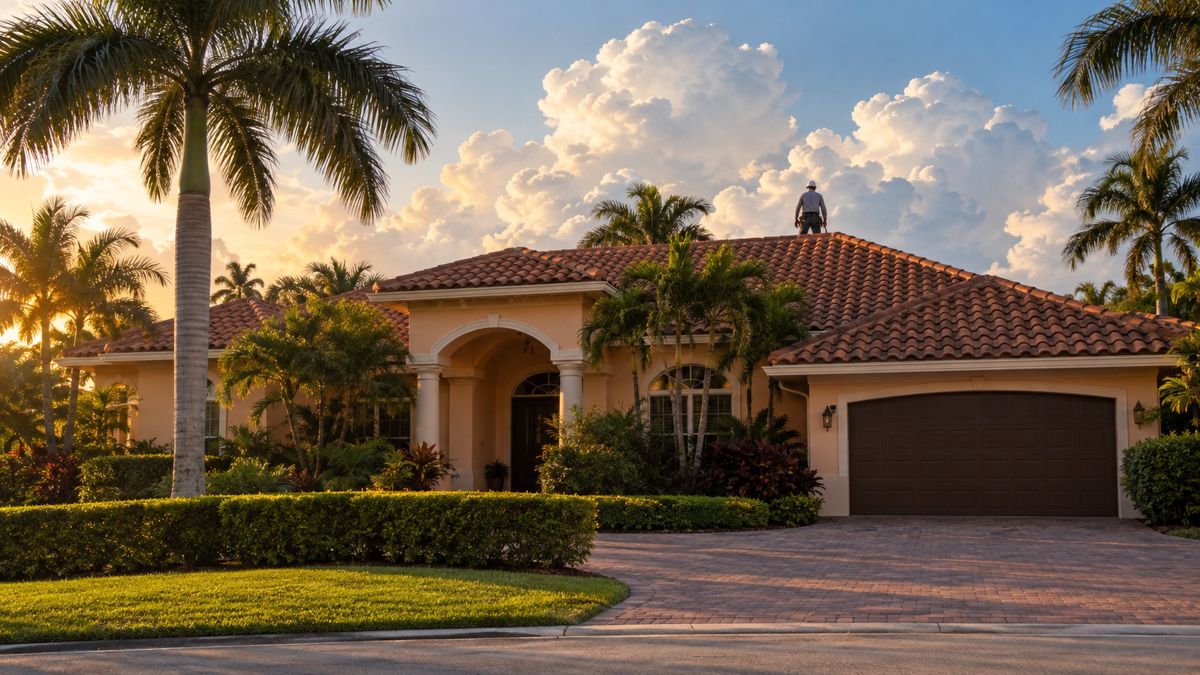
Peach stucco Florida home with a barrel tile roof under tall summer clouds

Salt air and the coastal wind line

Roofing in Pompano Beach, FL

Coastal roof replacement, repair and inspections for Pompano Beach, built for salt air and strong wind. Request a quote and we confirm availability.

  • Tile, shingle, metal and flat roofs
  • Written quote before work begins
  • Permits handled for Broward County
  • Clear communication
  • Free inspections
  • Written estimates
  • Local crew

What makes roofing near the coast different

Pompano Beach sits on the Atlantic coast, with the Intracoastal Waterway running behind the beach. Salt air, strong winds and humidity put extra stress on roofing materials, and that changes which fasteners, flashing metals and sealants make sense. A roof a few miles inland can age more gently than one near the water.

Housing ranges from mid-century single-story homes to newer townhouses, waterfront residences, condo buildings and an industrial area near the airpark. Many older homes mix pitched sections with flat roofs over additions and porches, and each type has its own weak points.

Salt, wind and corrosion on coastal roofs

Salt spray speeds up corrosion on metal parts such as nails, screws, vent caps, drip edges and flashing. Using materials rated for coastal conditions makes a difference, and so does detailed work at edges, where wind tries to peel the roof up first. On tile roofs, mortar and fasteners are tested by gusts and pounding rain.

Roads such as Federal Highway, Atlantic Boulevard and I-95 pass through, and wind driven rain can reach parts of roofs that sit dry elsewhere. Flat and low-slope roofs near the water often show bare spots where the coating has been scoured by sun and salt. We look at edges, penetrations and metal parts closely on every coastal call.

Roofing services for Pompano Beach properties

All five services apply, with coastal details.

A coastal quote reflects a few additional factors:

  • Exposure. Closer to the beach means more salt and more wind.
  • Metal components. Upgraded fasteners and flashing cost more but last longer.
  • Roof geometry. Flat sections, parapets and balconies add detail work.
  • Existing condition. Rusted edges and soft decking increase repairs.
  • Access. Narrow lots and waterfront setbacks affect staging.

We keep these factors visible on the written quote.

Because oceanfront exposure varies a lot within a short distance, we ask how far you are from the water and which direction the roof faces. That alone can change the materials we propose.

Wind rules, permits and insurance in plain terms

Broward County sits in the high velocity hurricane zone, so reroofing requires permits and products approved for wind resistance. Coastal buildings may face extra scrutiny for edge metal and attachment. Ask the building department about your address, or let us describe the product approvals we plan to use in the quote.

Many insurers ask for a wind mitigation report, a different document from a roof condition inspection, and the two can affect your premium separately. Keep the paperwork for any upgrades you make. For condo buildings near the water, associations also plan around reserves and recertification requirements, and a roof inspection report can feed into them.

Requesting a roofing quote in Pompano Beach

We serve Pompano Beach. Send the form below or call (954) 555-0128, and we confirm whether we can take on your roof.

  1. Tell us how far the property is from the water and the roof type.
  2. Describe leaks, rust or storm damage you have noticed.
  3. Add photos of the edges, vents and any flat sections.
  4. We reply with questions and plan an on-roof visit.
  5. The written quote follows, with notes on coastal materials.

If your property has been through storms recently, photos taken after a storm are helpful, as are any earlier inspection reports. The request itself is free.

Get a quote in Pompano Beach

Tell us what you need and we call you back.

No obligation.

Step 1 of 3

What do you need?

Questions about Pompano Beach

Do coastal roofs need special materials?

Often yes, especially for metal parts. Corrosion-resistant fasteners, flashing and edge metal hold up better in salt air. Roofing products must also meet county approval for wind. We list the materials we propose, so you can see how they suit your property. A short call can often tell us how corrosion-resistant the parts need to be.

Why does my roof have rust stains near the edges?

Rust stains usually come from steel fasteners, flashing or drip edge corroding in humid, salty air. They are a sign that metal parts need attention, and the roof may be near the end of its life. We check what is corroding and recommend a fix. Stains can also show on fascia, gutters and nearby walls.

Can an older flat roof near the water be saved?

Maybe. If the insulation is dry and the membrane is mostly sound, a repair or coating can extend its life. If water has soaked in, the roof system may need replacement. We test and explain which condition applies before offering a scope. Rooftop equipment on flat roofs can hide leaks near its base.

What is a wind mitigation report?

It documents roof and opening features that resist wind, such as roof shape, deck attachment and window protection. Insurers may use it to adjust premiums. It differs from a roof condition inspection. If you need one, we can tell you what the roof contributes, though a certified inspector issues the report. Ask your insurer which form it wants.

Do you work on waterfront condo buildings?

Yes, we quote roofs for associations and management companies. Waterfront buildings often have access limits, tide-side wind exposure and strict schedules. Tell us the building height, roof type and contact person, and we plan the work with those details in mind. Mention elevators or rooftop mechanical equipment, since they affect planning.